
Green Olive Paste Producer, Supplier, Wholesale Exporter: How To Source Premium Mediterranean Quality
Green olive paste sounds simple, just olives, maybe a little olive oil, a pinch of salt. But anyone who has tasted a truly excellent one next to a flat, overly salty, mass-market version knows the gap is huge. Buyers aren’t just looking for a green olive paste producer. We’re looking for consistency, traceability, clean ingredients, export reliability, and that unmistakable Mediterranean character that makes the product worth stocking in the first place.
Whether we’re sourcing for retail shelves, foodservice menus, deli counters, or industrial manufacturing, the right partner matters as much as the recipe. A strong supplier can preserve the flavor of handpicked olives from grove to jar: a weak one can turn a premium ingredient into a commodity.
In this guide, we’ll break down what makes green olive paste valuable, how producers protect quality, what separates producers from wholesalers and exporters, and how to evaluate a sourcing partner before placing an order, especially if authentic Greek and Mediterranean quality is the goal.
What Makes Green Olive Paste A High-Value Mediterranean Ingredient
Green olive paste earns its place as a premium Mediterranean ingredient because it delivers a lot of flavor in a very small spoonful. Good paste captures the bright, grassy, slightly peppery character of unripe or early-harvest olives and concentrates it into a format that’s easy to use across kitchens and product lines.
That matters for both home cooks and commercial buyers. In retail, it feels artisanal and elevated, something consumers spread on crostini, fold into pasta, or pair with cheese boards. In foodservice, it saves prep time while keeping a distinctive, house-made feel. And in manufacturing, it works as a flavor-building base for fillings, sauces, savory pastries, marinades, and Mediterranean ready meals..

Its value also comes from versatility. Green olive paste can be rustic or refined. It works in bruschetta, canapés, sandwiches, grain bowls, baked fish dishes, and dips. A premium version typically relies on a short ingredient list, green olives, extra virgin olive oil, salt, and sometimes herbs or lemon, rather than fillers or stabilizers.
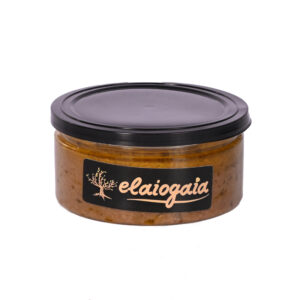
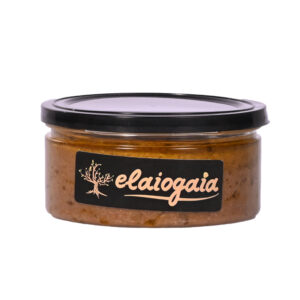
There’s also the origin story. Mediterranean olive products carry cultural and culinary weight. Buyers increasingly want authentic sourcing, especially from Greece and neighboring olive-growing regions, where olive cultivation is tied to tradition, seasonality, and regional taste. That’s one reason brands like Elaiogaia Olives resonate: the appeal isn’t just the paste itself, but the promise of pure Mediterranean goodness without unnecessary additives or compromises.
How A Green Olive Paste Producer Ensures Quality From Olive Grove To Finished Product
The best green olive paste producers control more of the journey than buyers sometimes realize. Quality doesn’t begin in the factory: it begins in the grove.
First comes olive selection. Producers focused on premium output choose suitable green olive varieties, harvest at the right maturity, and reject damaged fruit. Handpicking or careful mechanical harvesting helps reduce bruising, which affects flavor and texture. Freshness matters too. Olives processed quickly after harvest keep a brighter profile and avoid the dull, tired taste that shows up in lower-grade products.
Then comes curing and preparation. Green olives are naturally bitter, so producers have to manage debittering carefully. Over-processing strips character: under-processing leaves harshness. Once pitted, the olives are ground into paste, often with extra virgin olive oil to improve mouthfeel, aroma, and stability.
At this stage, consistency becomes the real test. A capable producer standardizes salt levels, particle size, oil integration, and batch profile so each shipment matches the last. This is especially important for private label, foodservice chains, and manufacturers that need repeatable flavor.
Finally, packaging and storage protect what the grove delivered. Oxygen exposure, heat, and poor sealing all degrade olive paste. Producers with serious export experience use controlled filling, appropriate containers, and documented quality checks. That grove-to-finished-product discipline is what separates a merely acceptable paste from a memorable one.
Key Differences Between Producers, Suppliers, Wholesalers, And Exporters
These terms often get used interchangeably, but they don’t mean the same thing, and knowing the difference makes sourcing much easier.
A producer is the company that actually makes the green olive paste. They source or grow olives, process them, formulate the product, and pack it. If we want insight into ingredients, harvest quality, production methods, or custom formulation, the producer is usually the most authoritative partner.
A supplier is the broader commercial source we buy from. Sometimes that’s the producer directly. Sometimes it’s a distributor or trading company that represents multiple products and brands. Suppliers can be convenient, especially if we want mixed Mediterranean product lines in one order.
A wholesaler focuses on volume. Wholesalers buy and resell in bulk to retailers, delis, restaurants, and other businesses. Their strength is availability, order consolidation, and pricing tiers. Their weakness, sometimes, is limited visibility into production details.
An exporter specializes in international shipment. That includes documentation, customs readiness, labeling compliance, certificate management, and logistics coordination for overseas markets. A producer can also be an exporter, and that’s often ideal because it reduces handoff points.
In practice, the strongest sourcing partner may wear all four hats. But we still want to know which role they truly control. If quality is our priority, direct producer access matters. If global reliability matters, export capability matters just as much.
What To Look For In Green Olive Paste For Retail, Foodservice, And Manufacturing
Different buyers need different things, but a few standards carry across every channel. We should start with the basic question: who is the end user, and how will the paste be used?
For retail, sensory appeal drives success. Consumers want a clean label, attractive jar, vivid olive color, and a flavor that feels authentic rather than aggressively salty. Packaging size matters here too: small glass jars are common because they communicate quality and fit everyday use.
For foodservice, the priorities shift slightly. Chefs and operators want flavor consistency, labor savings, and a texture that spreads well or mixes easily into recipes. The product needs to hold up after opening and perform across multiple applications, from sandwiches to appetizers.
For manufacturing, stability and specification control become critical. Buyers may need standardized moisture, salt, pH, and texture for incorporation into prepared foods. Bulk availability and batch consistency are non-negotiable.
Across all three channels, origin matters more than it used to. Mediterranean sourcing, especially from established olive regions, signals authenticity. And buyers increasingly prefer products made with simple ingredients and no unnecessary additives.
Core Quality Standards: Ingredients, Texture, Flavor, And Shelf Stability
At minimum, we want a short, understandable ingredient list: green olives, extra virgin olive oil, and salt. Some recipes include herbs, vinegar, lemon juice, or capers, but the base should still taste olive-forward.
Texture should match the intended use. A premium retail paste is usually smooth but not soupy. Foodservice may prefer a slightly more rustic texture. Industrial buyers may request exact grind specifications.
Flavor should be fresh, savory, mildly bitter in a pleasant way, and balanced by fruitiness from olive oil. If salt is the loudest note, quality is probably mediocre.
And shelf stability has to be proven, not assumed. Buyers should ask how the paste performs over time, what packaging protects it best, and whether opened-product handling guidance is clear. Good green olive paste should stay stable without tasting tired long before its shelf-life date.
Packaging Options For Bulk, Private Label, And International Distribution
Packaging isn’t just a logistics choice: it shapes shelf appeal, shelf life, freight cost, and market fit.
For retail, glass jars remain the classic format. They signal premium quality, let buyers see the product, and work well for gourmet positioning. Common sizes range from small tasting jars to larger deli-friendly formats around 10 ounces. Glass is heavier, of course, so it raises freight costs, but many brands still accept that tradeoff because it supports a high-end image.
For foodservice and bulk, metal tins and food-grade plastic containers are more practical. They’re lighter, stack efficiently, and reduce breakage risk. Larger pails or barrels are common for manufacturing, where visual presentation matters less than handling efficiency and cost control.
For private label, flexibility is the big issue. A capable green olive paste supplier should offer customizable labels, carton specs, language variations, and, ideally, help with market-specific compliance points.
For international distribution, packaging has to survive transport stress: long transit times, temperature variation, palletization, and customs inspections. Seal integrity becomes crucial. So does secondary packaging. A gorgeous jar that leaks in transit is not a premium product anymore.
The best exporters think one step ahead. They match pack format to channel, target country, and shipping method rather than forcing every buyer into the same packaging template.
Certifications, Traceability, And Food Safety Requirements For Global Buyers
In our days, quality claims are nice. Documentation is better.
If we’re sourcing green olive paste for serious commercial use, we should expect recognized food safety systems and clear traceability. Certifications such as BRCGS, FSSC 22000, and ISO-based quality systems are often the first things buyers check because they indicate structured controls around production, hygiene, hazard management, and continuous monitoring.
Traceability matters just as much. We want to know where the olives came from, when they were harvested or processed, what lot number applies to the finished batch, and how quickly a supplier can retrieve supporting records if an issue arises. Fast, complete traceability protects both the buyer and the brand.
Global buyers may also need market-specific paperwork: certificates of origin, health certificates, allergen statements, nutritional data, microbiological specs, pesticide residue compliance, and packaging declarations. Organic, kosher, or halal certification may be relevant depending on the market.
This can sound bureaucratic, but it’s really about risk management. A trustworthy exporter has these documents organized before we ask, not after. That readiness signals maturity. And when a supplier pairs certifications with transparent sourcing and clean formulations, it strengthens the overall value proposition considerably.
How To Evaluate Wholesale And Export Readiness Before Placing An Order
A polished brochure doesn’t prove a supplier is ready for wholesale or export. We need to test the operation from several angles.
Start with samples. Taste them more than once, in more than one application. Try the paste on bread, in pasta, with cheese, and as an ingredient in a finished dish. We should look for consistency, freshness, clean aroma, and an absence of metallic, stale, or overly acidic notes.
Next, review the technical documents. Ask for product specifications, shelf-life data, microbiological results, allergen information, nutrition panels, and certification copies. If responses are slow or incomplete now, they probably won’t improve after payment.
Then check commercial readiness: minimum order quantities, lead times, pallet configuration, Incoterms, payment terms, and private-label capabilities. Export-ready partners should explain these clearly.
It’s also smart to ask about production capacity and seasonality. Can the supplier support growth? Can they maintain profile consistency across harvests? Experience matters here: companies with long export histories generally handle variability better.
Finally, assess communication. It sounds basic, but it’s revealing. The best wholesale partners are organized, direct, and realistic. They don’t overpromise. They know their product, understand destination-market requirements, and make sourcing feel manageable rather than murky.
Common Uses For Green Olive Paste In Gourmet, Healthy, And Mediterranean Cuisine
Green olive paste is one of those ingredients that quietly upgrades everything around it. A small amount can make a dish feel more finished, more layered, more Mediterranean.
In gourmet applications, it shines as a spread for crostini, bruschetta, and canapés. It pairs naturally with roasted peppers, feta, goat cheese, anchovies, tomatoes, and grilled vegetables. Stirred into pasta with lemon zest and herbs, it creates a fast sauce with real character.
For healthy eating, green olive paste has obvious appeal. It’s plant-based, intensely flavored, and often made with simple ingredients, so a little goes a long way. Used well, it can replace heavier spreads or overly processed condiments. It works in grain bowls, wraps, salad dressings, and vegetable platters without feeling like “health food.”
In Mediterranean cuisine, the uses are even broader: spooned over fish, folded into savory pastries, spread inside sandwiches, served with legumes, or mixed into yogurt-based dips. It also performs beautifully in modern fusion dishes, olive paste aioli, olive vinaigrettes, or marinades for chicken and seafood.
That range is part of why buyers seek it out. It’s not just a niche specialty: it’s a flexible, flavor-dense ingredient with broad menu and retail potential.
Conclusion
Sourcing green olive paste well means looking beyond price per unit. We need to assess grove quality, formulation, packaging, documentation, and export competence together. The best green olive paste producer, supplier, wholesale exporter will offer more than a product, they’ll offer consistency, transparency, and a flavor profile that actually reflects Mediterranean origin.
For buyers who value authenticity, simple ingredients, and dependable global supply, that combination is what turns a good olive paste into a strong long-term business choice. And in a crowded market, genuine Mediterranean quality still stands out immediately, usually from the very first taste.
Green Olive Paste: Frequently Asked Questions
What makes green olive paste a high-value Mediterranean ingredient?
Green olive paste is prized for its intense, fresh flavor derived from handpicked green olives and extra virgin olive oil. It offers a versatile, concentrated Mediterranean taste ideal for gourmet dishes like bruschetta, canapés, and sauces, making it a premium culinary choice.
How do green olive paste producers ensure consistent quality from grove to jar?
Producers maintain quality by selecting suitable green olives, often handpicked at optimal maturity, controlling curing and grinding processes, and standardizing salt and oil levels. Proper packaging and storage protect freshness, ensuring consistent flavor and texture across batches and exports.
What are the differences between producers, suppliers, wholesalers, and exporters of green olive paste?
Producers manufacture green olive paste from raw olives, controlling ingredients and processing. Suppliers and wholesalers distribute the product in bulk or mixed lines. Exporters specialize in international shipping, certifications, and compliance. Some companies combine these roles for better control and reliability.
What should buyers look for in green olive paste for retail, foodservice, and manufacturing?
Retail buyers value appealing packaging, clean labels, and mild artisanal flavors. Foodservice needs consistency, ease of use, and texture that spreads or mixes well. Manufacturers require bulk availability with stable moisture, salt, and texture specifications for use in prepared foods.
Why is traceability and certification important when sourcing green olive paste for export?
Traceability ensures olives’ origin, harvest dates, and batch records are documented, protecting buyers and brands. Certifications like BRCGS, FSSC 22000, and ISO guarantee food safety and quality controls. These factors are critical for global buyers managing risk and meeting regulatory requirements.
What are common culinary uses of green olive paste in Mediterranean cuisine?
Green olive paste enhances dishes as a spread on crostini and sandwiches, an ingredient in pasta sauces, dips, savory pastries, and marinades. Its intense flavor complements healthy and gourmet recipes, adding authentic Mediterranean taste to a wide range of traditional and fusion dishes.