
Black Olive Paste Producer, Supplier, Wholesale Exporter: How To Source Authentic Mediterranean Quality
If we’re sourcing black olive paste, we’re not just buying a spread in bulk, we’re choosing flavor, consistency, shelf appeal, and supply reliability all at once. For retailers, importers, distributors, chefs, and gourmet brands, black olive paste sits in that sweet spot between pantry staple and premium Mediterranean ingredient. It’s versatile, label-friendly, and instantly recognizable to consumers who want authentic savory depth.
But not all suppliers deliver the same result. One producer may offer bold, naturally brined olive character with clean ingredients and dependable export support: another may sell a paste that looks fine on paper but arrives with flat flavor, uneven texture, or shaky documentation. That gap matters.
In this guide, we’ll walk through what black olive paste is, how to assess a producer or wholesale exporter, which specifications actually matter, and how to choose a long-term supply partner that can support real growth. For brands focused on authentic Greek quality, producers such as Elaio Gaia Olives reflect the kind of Mediterranean sourcing standards buyers increasingly look for.
What Black Olive Paste Is And Why It Matters In Wholesale Food Markets
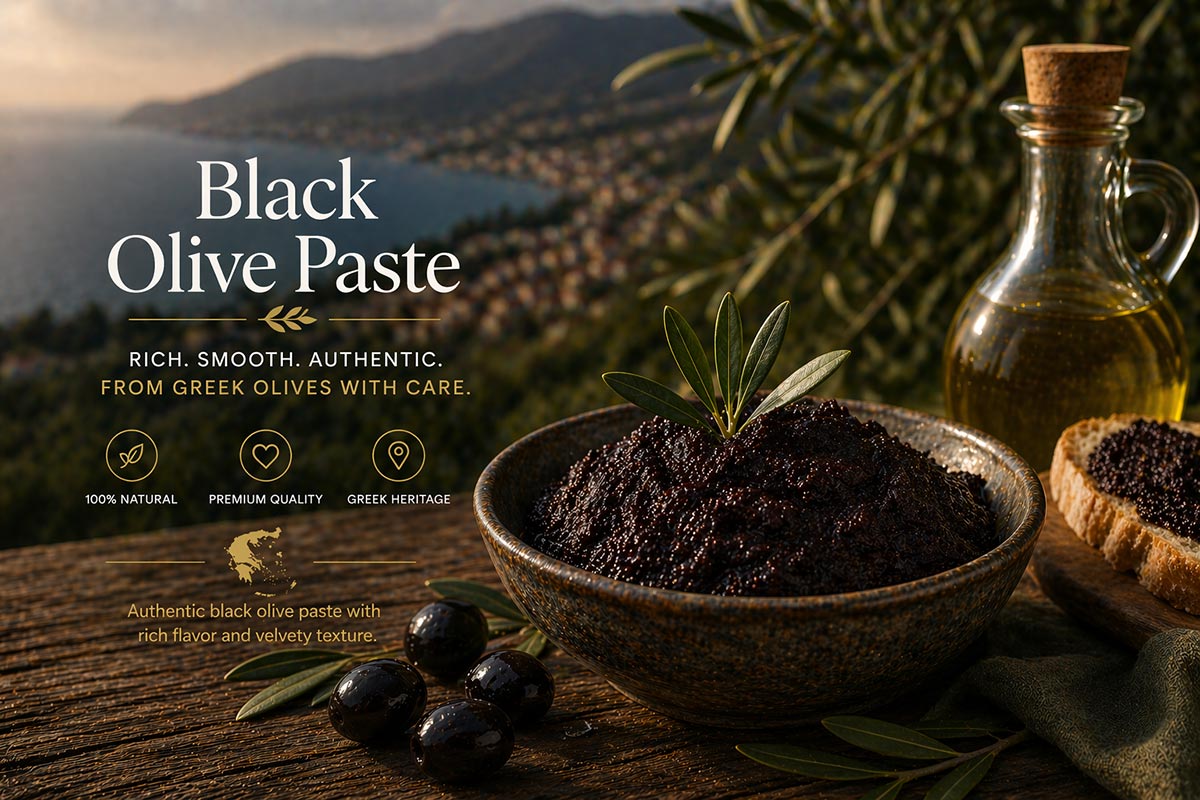
Black olive paste is a smooth or slightly textured savory spread made by mincing or blending black olives, typically with olive oil, salt, and sometimes herbs or spices. In practical terms, it delivers concentrated olive flavor in a ready-to-use format. That’s a big reason it performs so well in wholesale food markets.
For retail, it fits neatly into the premium condiments and Mediterranean specialties category. For foodservice, it saves prep time while giving kitchens a reliable base for sandwiches, canapés, pasta sauces, dressings, and composed plates. For gourmet manufacturers, it can be used as an ingredient in fillings, marinades, bakery applications, and antipasti ranges.
Why does it matter commercially? Because it combines three things buyers love: strong culinary identity, broad menu versatility, and relatively simple ingredients. Consumers often read a black olive paste label and understand it immediately. There’s no mystery there.
And when the product is made well, the taste does the selling, deep, briny, earthy, rich. In a market crowded with generic spreads, authentic Mediterranean black olive paste still feels distinctive. That makes it a smart product for wholesalers looking for both everyday usability and premium positioning.
What Defines A Reliable Black Olive Paste Producer And Export Partner
A reliable black olive paste producer is more than a factory that can fill jars. We should look for a partner that combines raw material control, food safety systems, export experience, and responsive communication.
The first sign is operational focus. Producers with established olive-processing backgrounds, especially family-run Mediterranean companies with decades in the sector, tend to understand harvest quality, brining methods, and consistency better than traders who simply outsource production. Export history matters too. If a company already serves international buyers, it usually has stronger documentation processes and better logistics discipline.
Certifications are another filter. HACCP and ISO 22000 are strong indicators that a supplier takes process control seriously. Organic certification may matter depending on the market. But paperwork alone isn’t enough: we also want batch consistency, transparent specs, and realistic lead times.
A dependable exporter should be able to answer straightforward questions quickly: What olive variety is used? Is the paste pitted before processing? What’s the oil percentage? Are there preservatives or allergens? What packaging options are available?
In our experience, the best export partners don’t dodge details. They provide them clearly, and that usually tells us we’re dealing with a serious supplier.
How Black Olive Variety, Origin, And Processing Affect Flavor And Quality
Not all black olive paste tastes the same, and the difference usually starts with three factors: variety, origin, and processing.
Olive variety shapes the flavor profile first. Souri olives, for example, are often associated with a rounded, deep, mature taste. Kalamata-based pastes can be bolder, fruitier, and more wine-like. Niçoise-style profiles tend to bring a sharper, more delicate intensity. For a buyer, that means the “best” olive paste isn’t universal, it depends on the final use and customer palate.
Origin matters because terroir matters. Greek black olive paste often brings a robust, sun-ripened Mediterranean character that works especially well in gourmet and natural-food channels. Italian origin can lean elegant and herbaceous depending on formulation. Buyers selling authenticity should never treat origin as a throwaway detail.
Then comes processing. Natural brining generally preserves complexity better than shortcuts designed only for speed. Proper pitting is essential: no one wants fragments or bitterness from rough handling. Mincing and blending methods affect texture, while the balance of olive oil and salt determines whether the paste tastes clean or heavy.
A well-made product should taste like olives first, not like salt, filler, or acid correction. That’s the benchmark.
Key Product Specifications Wholesale Buyers Should Review Before Ordering
Before placing a wholesale order, we need to review the technical details, not just the marketing sheet. A black olive paste may look similar across catalogs, but specifications reveal whether it will actually fit our market.
Start with the ingredient list. Ideally, it should be short and clear: black olives, olive oil, salt, and possibly herbs, vinegar, or spices depending on the recipe. If a product includes unnecessary additives, stabilizers, or artificial components, that may weaken its premium appeal.
Then check the physical profile:
- Color: deep brown to black, natural and even
- Texture: smooth or rustic, but consistent
- Flavor: balanced olive intensity without harshness
- Readiness for use: spreadable and stable in normal serving conditions
Net weight and pack size matter too. Retail jars often sit in the 170g to 210g range, while foodservice and industrial buyers may need larger formats.
We should also verify shelf life, storage conditions, allergen declarations, and any trace disclosures such as sulphites if applicable. Nutritional values can influence retail positioning, especially for health-conscious buyers.
And one more thing: ask for samples from different batches if possible. A single perfect sample proves very little. Batch-to-batch consistency proves a lot.
Packaging Formats And Private Label Options For Different Sales Channels
Packaging isn’t just a finishing touch: it changes how black olive paste performs in the market. The right format depends heavily on whether we’re selling through retail, foodservice, or private-label distribution.
For retail shelves, glass jars remain the strongest option. They signal quality, protect flavor well, and suit premium Mediterranean branding. Common sizes like 190g or 210g are familiar to consumers and work well in gourmet, deli, and specialty food stores.
For foodservice, larger jars, tubs, or bulk containers make more sense. Restaurants and caterers care less about shelf aesthetics and more about efficiency, resealability, and yield. If the product is being used in dips, sandwiches, or prep stations, labor-saving formats matter.
Private label adds another layer. Many wholesale exporters now offer custom lids, labels, carton design, language adaptation, and market-specific compliance support. That’s valuable for importers and brands building their own Mediterranean range.
When reviewing packaging options, we should ask:
- Is the material suitable for our channel?
- Can the supplier support multilingual labeling?
- What are the MOQ requirements for private label?
- Can they adapt packaging for different export markets?
A flexible supplier is often far more valuable than the cheapest one. Packaging affects margins, perception, and repeat sales.
Food Safety, Certifications, And Export Documentation To Verify
Food safety is where wholesale buying stops being romantic and gets very real. But beautiful the product story is, we still need proof that the supplier operates to recognized standards.
At minimum, HACCP should be in place. ISO 22000 adds another strong layer of confidence for food safety management. Depending on the market, buyers may also need organic certification, kosher or halal documentation, or evidence of compliance with local import regulations.
We should request current certificates, not vague claims on a website. Dates, issuing bodies, and product scope all matter.
Export documentation is just as important. A professional black olive paste exporter should be prepared to provide the usual trade paperwork, such as:
- Commercial invoice
- Packing list
- Certificate of origin
- Health or sanitary certificates where required
- Product specifications and technical data sheets
- Allergen and traceability information
Traceability is especially important for modern buyers. If there’s a quality issue, we need to know the supplier can track raw materials and production lots quickly.
In short, certifications reduce risk, but documentation proves readiness. A supplier that is slow, vague, or inconsistent here may create problems long before the product reaches the shelf.
How To Evaluate Supply Capacity, Consistency, And Logistics Support
Even an excellent black olive paste sample means little if the supplier can’t scale or deliver consistently. That’s why procurement should go beyond taste testing.
Start with supply capacity. Can the producer handle seasonal demand spikes, new market rollouts, or private-label growth? Ask about annual production volume, harvest sourcing, backup planning, and average lead times. A smaller artisan supplier may offer beautiful flavor but struggle with larger contracts. That’s not always a dealbreaker, but we need to know it upfront.
Consistency comes next. We should ask how the producer standardizes recipes, controls salt and oil ratios, and manages batch testing. Long-running olive processors often perform better here because they’ve built systems around agricultural variation.
Then there’s logistics support. Serious exporters should understand pallet optimization, container loading, transit conditions, labeling requirements, and customs documentation. Some can ship quickly: others need longer planning windows. Neither is inherently bad, but surprises are bad.
Useful questions include:
- What is the standard lead time?
- How do they manage out-of-stock risks?
- Can they support mixed pallets or mixed-product orders?
- Which markets do they already export to?
A good supplier doesn’t just make black olive paste. They help us keep it moving.
Best Uses For Black Olive Paste In Retail, Foodservice, And Gourmet Products
One reason black olive paste has strong wholesale potential is that it works across multiple channels without needing much explanation.
In retail, it sells well as a premium spread for crackers, toasted bread, sandwiches, and appetizer boards. It also fits naturally into Mediterranean, natural-food, and gourmet gift categories. Consumers who buy pesto, tapenade, hummus, or antipasti are already close to buying black olive paste.
In foodservice, chefs use it as a shortcut with integrity. It can anchor crostini toppings, enrich vinaigrettes, finish pasta dishes, flavor grain bowls, or act as a savory layer in wraps and panini. Mixed into mayonnaise or yogurt, it becomes a quick sandwich spread or dip. That kind of versatility matters in busy kitchens.
For gourmet product development, the opportunities widen further. Black olive paste can be folded into bakery fillings, savory pastries, stuffed vegetables, prepared meals, marinades, and charcuterie accompaniments. It pairs especially well with roasted peppers, feta, tomato, herbs, and citrus.
From a sales perspective, that broad utility is gold. One SKU can serve several customer types, which makes it easier for wholesalers and importers to justify inventory space.
Common Mistakes Buyers Make When Choosing A Wholesale Olive Paste Supplier
Buyers rarely make just one mistake. Usually it’s a chain of small assumptions.
The first is choosing on price alone. Low pricing can hide weaker olive quality, excessive salt, poor oil balance, or less dependable packaging. If the product doesn’t perform, the “savings” disappear fast.
Another common mistake is ignoring olive variety and origin. A buyer may request black olive paste as if it were a generic commodity, then discover the flavor doesn’t match the target market. Greek and Italian profiles can differ meaningfully. So can formulations made from different olive cultivars.
Some buyers also skip certification checks or assume export capability without verifying documentation. That’s risky. A supplier may be perfectly legitimate domestically but unprepared for international compliance.
Then there’s underestimating consistency. One sample, one trade-show tasting, or one early batch is not enough. We should ask for specs, repeat samples, and evidence of process control.
Finally, many buyers fail to discuss packaging and logistics early enough. MOQ, label compliance, and lead time can derail an otherwise promising deal.
A careful buying process feels slower at first. In reality, it prevents expensive problems later.
Conclusion: Choosing The Right Black Olive Paste Supplier For Long-Term Success
Choosing a black olive paste producer, supplier, wholesale exporter is really about reducing risk while protecting flavor. We want authentic Mediterranean character, yes, but also dependable specs, strong certifications, scalable supply, and export competence.
The best partners are transparent about origin, variety, processing, packaging, and documentation. They understand that buyers need more than a nice sample: we need repeatable quality and commercial reliability. For businesses that value pure ingredients and genuine Greek heritage, suppliers aligned with the standards seen at Elaio Gaia Olives represent the direction the market is moving.
Long-term success won’t come from buying the cheapest olive paste. It’ll come from sourcing the right one, from the right partner, for the right channel.
Black Olive Paste Producer Supplier Wholesale Exporter FAQs
What is black olive paste and why is it important for wholesale buyers?
Black olive paste is a smooth or textured spread made from minced black olives blended with olive oil, salt, and spices. It offers concentrated olive flavor and culinary versatility, making it popular in retail, foodservice, and gourmet markets for its authentic Mediterranean appeal.
How do I identify a reliable black olive paste producer or exporter?
Look for producers with established Mediterranean olive-processing backgrounds, HACCP and ISO 22000 certifications, export experience, transparent communication, consistent batch quality, and the ability to provide detailed product specifications and export documentation.
What factors affect the flavor and quality of black olive paste?
Flavor and quality depend on olive variety (e.g., Souri, Kalamata), origin (Greek, Italian), natural brining methods, pitting quality, mincing technique, and ingredient balance. Authentic pastes taste like olives first, not overly salty or artificial.
What packaging options are common for black olive paste in wholesale markets?
Retail typically uses glass jars (around 190-210g) to signal premium quality, while foodservice prefers larger tubs or bulk containers for efficiency. Many exporters offer private label customization, multilingual labeling, and market-specific packaging compliance.
Why are certifications and export documentation critical when choosing a black olive paste supplier?
Certifications like HACCP and ISO 22000 prove food safety management, while proper export documents (commercial invoice, certificates of origin, health certificates) ensure compliance with international trade regulations and reduce risk in supply chains.
What common mistakes should buyers avoid when selecting a wholesale black olive paste supplier?
Avoid choosing solely on price, ignoring olive variety and origin, skipping certification verification, relying on a single sample without consistency checks, and neglecting packaging and logistics discussions upfront, as these can lead to quality and supply issues.