



Black Amfissa Olives Wholesale Exporter Guide: How To Source Authentic Greek Quality
Not all black olives are interchangeable, and wholesale buyers usually learn that the hard way. In the premium Mediterranean ingredients market, Black Amfissa olives stand out for a reason: they offer a softer bite, a rounder shape, and a milder, fruitier profile than many of the harsher, heavily processed black olives found in commodity channels. For importers, retailers, foodservice buyers, and private label brands, that difference matters.
In our days, sourcing authentic Greek olives means looking beyond price per kilo. We need to understand origin, curing method, product format, traceability, and export readiness before we choose a Black Amfissa olives supplier wholesale exporter. That is especially true if we want consistent quality and a product story consumers actually care about.
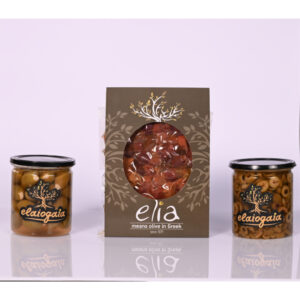
In this guide, we’ll break down what makes Black Amfissa olives distinctive, how they’re prepared for export, what packaging options exist, and how to assess suppliers, including producers focused on authentic Greek quality, such as Elaio Gaia Olives, where tradition and clean Mediterranean sourcing are central to the offer.
What Makes Black Amfissa Olives Distinct In The Wholesale Market
Black Amfissa olives occupy an interesting place in the wholesale olive category. They’re recognizable enough for serious buyers, yet still underappreciated compared with more widely marketed Kalamata olives. That creates opportunity. For distributors, gourmet retailers, and manufacturers, Amfissa olives can offer a premium Greek profile with broad culinary appeal.
One of the biggest differentiators is texture. These olives are typically plump, tender, and juicy rather than dense or leathery. Their flavor is also more approachable: mildly fruity, balanced, and less aggressively salty or bitter when properly cured. In practical terms, that makes them easier to position across categories, from deli counters to antipasti packs to prepared foods.
Another distinction is the traditional processing style often associated with the variety. Authentic Black Amfissa olives are commonly naturally cured rather than treated with lye, which matters to buyers looking for cleaner-label Mediterranean ingredients. In a market where end consumers are reading labels more closely, that detail is not minor.
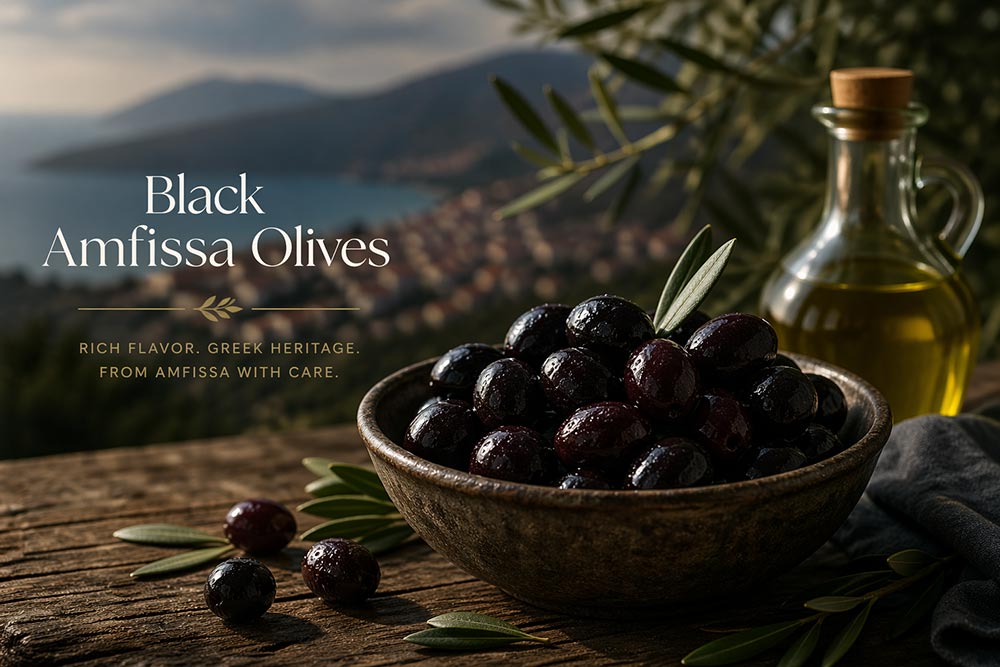
And then there’s visual appeal. Their deep purple-black color and rounded shape make them attractive in retail packaging and plated dishes alike. For wholesale buyers, appearance affects more than aesthetics: it influences perceived quality, shrink, and shelf appeal.
Origin, Variety, And Flavor Profile Buyers Should Know
Black Amfissa olives come from the Conservolea variety, a classic Greek olive grown in central and western Greece, including areas around Amfissa, Arta, and Agrinio. Depending on the growing zone, microclimate, and harvest timing, the fruit may show slight variation in size and character, but the core profile remains consistent.
Compared with sharper table olives, Amfissa olives tend to be round and large-fruited, with a mellow, almost buttery feel. Buyers often describe the flavor as fruity, smooth, and softly wine-like, without the intense punch some consumers associate with brined black olives. That makes them versatile: premium enough for charcuterie boards, but easy enough for mainstream retail.
Origin matters here. Greek provenance adds commercial value because buyers and consumers link Greece with olive-growing tradition, authenticity, and Mediterranean diet appeal. When we source from a reliable exporter, the origin story becomes part of the sales argument, not just a line on a spec sheet.
How Black Amfissa Olives Are Processed, Cured, And Prepared For Export
Processing has a direct effect on flavor, color, shelf life, and export suitability. Black Amfissa olives are usually harvested in October and November, once the fruit has matured and developed its richer color and softer flesh. Timing matters: harvest too early and the olive can be firmer and more bitter: too late and handling becomes more delicate.
Traditional curing is one of the reasons this variety has such a loyal following. Instead of relying on lye treatment, many Greek processors cure Amfissa olives naturally with salt or brine over time. That slower method helps preserve the olive’s inherent flavor while reducing bitterness in a gentler way. It also supports a more natural product story, which is increasingly valuable in export markets.
In some production flows, the olives begin with a lighter or “blonde” appearance during curing and then develop the darker black tone through oxidation and finishing steps. Export-ready preparation may also include sorting by size, pitting or slicing, and packing into containers suited for long-distance distribution.
For thermal stability, many exporters use pasteurization, often in the 70°C to 90°C range, depending on format and packaging. Varnished cans, PET jars, pouches, and vacuum-sealed options can all be used based on the destination market. Some suppliers also offer sun-dried or semi-dried versions for specialty applications.
From a buyer’s standpoint, the key question isn’t just “How are they cured?” but “Does the process preserve texture and flavor while supporting consistent export quality?” That’s what separates a dependable wholesale exporter from a trader moving interchangeable product.
Wholesale Product Formats And Packaging Options For Different Buyers
Black Amfissa olives are not a one-format product. The right format depends on where the olives are going, who is using them, and how much handling the buyer wants to do after import. A food manufacturer may want standardized bulk product with exact size counts: a gourmet retailer may care more about visual presentation and consumer-friendly packaging.
This flexibility is one reason the variety performs well across wholesale channels. Suppliers that understand export markets usually provide multiple processing and packaging options instead of forcing buyers into a single spec. That adaptability matters when we’re balancing freight cost, labor efficiency, shelf appeal, and menu or formulation needs.
Whole, Pitted, Sliced, And Ready-To-Pack Selections
Whole Black Amfissa olives remain the classic choice for deli, table olive assortments, and traditional retail packs. They showcase the fruit’s round shape and plump appearance, which is part of the appeal. For buyers focused on presentation, whole olives often command the strongest premium.
Pitted options are also widely requested, especially by foodservice operators and prepared-food manufacturers. Large and extra-large calibrations, such as 201–230 count sizes, are commonly marketed because they combine convenience with a premium feel. Sliced olives serve a different purpose: they reduce prep time for pizza, salads, sandwiches, and industrial food production.
Some suppliers also offer olive paste or other ready-to-pack derivatives. That opens the door for tapenades, spreads, bakery fillings, and value-added Mediterranean products. If we’re sourcing for manufacturing, these secondary formats can be just as important as whole fruit.
Bulk, Retail, Foodservice, And Private Label Packaging Choices
Bulk packaging is built for efficiency. Importers, repackers, and industrial users often buy in large cans, pails, drums, or food-grade containers designed to protect the product through transport and storage. This format usually provides the best unit economics.
Retail packaging is different. Here, convenience and shelf impact matter more. Suppliers may offer PET jars, vacuum packs, cans, or multi-pack formats such as 3 x 250 g units and 500 g consumer packs. Clear packaging can be especially effective because the olives’ dark glossy color sells itself.
Foodservice buyers generally want larger but easy-to-handle packs for kitchens, formats that reduce waste and speed service. Private label customers need another layer of support: custom labeling, packaging design, barcode integration, and sometimes market-specific language compliance.
The best wholesale exporters don’t just sell olives: they help align the pack format with the commercial model.
What To Look For In A Reliable Black Amfissa Olives Supplier And Exporter
Choosing a Black Amfissa olives supplier wholesale exporter is partly about product quality and partly about operational trust. A beautiful sample means very little if the supplier can’t maintain consistency across harvests, documents, and shipments.
First, we want clarity on source. Does the supplier work directly with Greek growers or processors? Can they explain the variety, growing region, harvest period, and curing method without sounding vague? Real specialists usually can. Companies active in this space, from dedicated Greek processors to international exporters like Wikifarmer, Turkan Trading, Simolive, Latrovalis, and Interoliva, tend to differentiate themselves through sourcing depth, customization, or market reach.
Second, we should evaluate processing capability. Can they deliver whole, pitted, sliced, or private label formats? Can they meet sizing specs consistently? Are custom orders possible? A good exporter understands that one buyer may need retail-ready PET jars while another needs bulk pitted olives for manufacturing.
Third, communication matters more than many buyers admit. We should look for suppliers who answer technical questions quickly, provide specification sheets, share photos or lot details, and flag realistic lead times. If communication is fuzzy before the order, it usually gets worse after payment.
And finally, brand philosophy counts. Suppliers rooted in authentic Greek production, especially those emphasizing traditional methods, clean ingredients, and no unnecessary additives, often give buyers a stronger long-term story. That’s one reason businesses such as Elaio Gaia Olives fit well in premium and health-conscious channels.
Quality Standards, Traceability, And Food Safety Requirements
If we’re importing olives, quality claims alone aren’t enough. We need documentation. Buyers increasingly expect a supplier to prove origin, handling standards, and food safety controls with more than marketing language.
Traceability should start at the grove or producer level and continue through processing, packing, and shipment. At minimum, we want lot identification, harvest or production data, ingredient details, and the ability to connect finished goods back to the source batch. This matters for regulatory compliance, of course, but it also protects brand reputation if there’s ever a quality complaint.
Food safety standards are equally critical. Export-ready suppliers should operate under documented hygiene systems and be prepared to share certifications or audit information where relevant. Depending on the market, buyers may request HACCP-based systems, third-party food safety certifications, residue testing, microbiological results, or declarations related to additives and allergens.
For Black Amfissa olives specifically, process transparency is especially valuable. Was the fruit hand-picked or mechanically harvested? Was lye avoided? What brine composition is used? Was the product pasteurized? These details affect not only safety and shelf life, but also the product’s clean-label and premium positioning.
Sustainability increasingly enters the conversation too. Buyers want evidence of responsible farming, sensible water use, and reduced processing inputs. We don’t need every supplier to sound like a sustainability report, but we do need credible, checkable practices.
In short: if a supplier cannot document quality, we should treat the offer as incomplete, no matter how good the sample tastes.
How To Evaluate Pricing, Minimum Order Quantities, And Shipping Logistics
Price is never just price in olive importing. A lower quote can easily become the more expensive option once we factor in pit yield, drained weight, packaging strength, freight, customs handling, and spoilage risk. With Black Amfissa olives, quality variation can be significant enough that comparing offers only by FOB or CIF rate is a mistake.
Start with the specification. We should compare size grade, form, net and drained weight, brine strength, packaging type, and shelf life before we compare numbers. A large, naturally cured Greek olive in stable export packaging should not be benchmarked against a generic black olive with weaker traceability.
Minimum order quantities also vary widely. Some exporters support flexible MOQs for new buyers or mixed pallets for market testing, while others focus on container-scale business. Neither model is wrong, but it has to fit our channel. A gourmet importer may start small: a food manufacturer usually needs volume consistency from day one.
Logistics deserve equal attention. Can the supplier ship efficiently to the USA, Europe, or Asia? Do they have experience with export documents, labeling rules, and customs requirements in the destination market? Are they working with stable freight partners? Global exporters such as Turkan Trading position themselves around broad market reach and custom order flexibility, but the underlying question is always the same: can the goods arrive in specification and on time?
We should also ask about lead times around harvest season, buffer stock, and contingency planning. Olives aren’t software: if a shipment slips, menus, promotions, and production schedules slip with it.
Who Buys Black Amfissa Olives And How They Are Used Across Categories
Black Amfissa olives appeal to more buyer types than many people expect. Their balanced flavor and attractive appearance make them useful across both premium and mainstream channels.
Food manufacturers buy them as ingredients for ready meals, olive mixes, bakery products, spreads, and Mediterranean snack items. For these buyers, consistency and processing format matter most. Pitted or sliced olives can save labor and improve line efficiency.
Retailers and gourmet stores value them for a different reason: story plus shelf appeal. Greek origin, natural curing, and a soft, fruity profile are easy selling points in specialty aisles. Delis and premium supermarkets often use whole or pitted formats in jars, vacuum packs, and antipasti assortments.
Restaurants, caterers, and hotels are another major segment. In foodservice, Black Amfissa olives show up in Greek salads, mezze platters, pasta dishes, grain bowls, roasted vegetable plates, and bar snacks. Because they’re milder than some sharper olive varieties, they work well in dishes where the olive should complement rather than dominate.
Health-conscious consumers also help drive demand. These buyers are drawn to Mediterranean ingredients with simple processing and recognizable origins. That doesn’t mean every wholesale customer markets olives as a wellness product, but clean ingredient positioning definitely helps.
For suppliers and importers, the takeaway is simple: this variety is commercially versatile. It can sit comfortably in gourmet retail, foodservice, and manufacturing without losing its identity.
The smartest sourcing decisions come from matching the right Black Amfissa olive spec to the right end use. When we do that well, we’re not just buying olives, we’re buying a reliable, premium Greek ingredient with real staying power in the market.
Frequently Asked Questions About Black Amfissa Olives Supplier Wholesale Exporter
What makes Black Amfissa olives unique compared to other black olives in the wholesale market?
Black Amfissa olives are prized for their soft, juicy texture, milder fruity flavor, and round shape. They are naturally cured without lye, which preserves their smooth taste and clean-label appeal, distinguishing them from harsher black olives often found in commodity channels.
How are Black Amfissa olives processed and prepared for export?
These olives are harvested in October-November, naturally cured with salt rather than lye, then undergo oxidation to develop their deep purple-black color. Export-ready olives are pasteurized at 70°C to 90°C and packed in cans, PET jars, or vacuum packs to maintain quality during international shipping.
What packaging and product formats are available from Black Amfissa olives wholesale exporters?
Suppliers offer various formats including whole, pitted (often extra-large 201-230 count), sliced, and paste. Packaging options range from bulk containers for manufacturers to retail-ready PET jars, cans, vacuum packs, and custom private-label solutions tailored to different buyer needs.
How can I evaluate and choose a reliable Black Amfissa olives supplier wholesale exporter?
Look for suppliers with transparent sourcing from certified Greek growers, proven processing capabilities across required formats, strong communication, and documentation on traceability and food safety. Established exporters like Wikifarmer, Turkan Trading, and Elaio Gaia emphasize tradition, quality consistency, and export readiness.
What types of buyers typically purchase Black Amfissa olives, and how are they used?
Buyers include food manufacturers using bulk olives in ready meals or spreads, gourmet retailers selling retail packs, and foodservice operators adding olives to salads, mezze, and Mediterranean dishes. The olives’ mild flavor and premium Greek origin make them versatile for various culinary applications.
Why is traceability and food safety important when importing Black Amfissa olives?
Traceability ensures olives can be tracked from grove to shipment, supporting quality assurance, regulatory compliance, and brand reputation. Food safety certifications and transparent curing methods, like natural salt curing without lye, confirm product safety and appeal especially to health-conscious consumers.